

Jerry Cantrell isn’t just any artist talking about the music industry, he’s a veteran who helped shape it. As the founder and guitarist of the legendary band Alice in Chains, Cantrell has been at the forefront of rock and metal, collaborating with icons like Ozzy Osbourne, Metallica, and Heart. Known for his distinctive guitar work and powerful songwriting, he has the authority to speak to the realities of this business. In a recent interview with Primordial Radio, Cantrell shared a hard truth about the industry today, calling streaming a “bad business model” that has only worsened the financial challenges for artists. “I’m no different than anybody else,” he explained, “I’ve still got to pay the bills, and I’ve got to work, this is my job.”
For indie artists like myself, Cantrell’s words hit home. The costs of making and promoting music haven’t gone down, yet, as he points out, revenue continues to shrink. Navigating this landscape isn’t easy, but there are platforms that still value fair artist support. For me, Bandcamp is one of those rare places.
Unlike mainstream streaming platforms, Bandcamp feels less like a “service” and more like a community. Artists can set their own prices, and fans often have the option to pay more, directly supporting the music they love. This approach is worlds away from the “fraction-of-a-cent” streaming model. Here, when a fan buys a track or an album, it directly supports real-world costs that keep my music alive. It’s not just about numbers; it’s a tangible way to keep projects moving forward.
Bandcamp has created a space focused on artist empowerment, enabling musicians to keep their rights and receive substantial support. Releasing tracks here, I know that the value goes beyond listens, it reaches a community of supporters who genuinely care about indie music and the people behind it. It’s the kind of place where, as an artist, I can take my work seriously and find a balance that feels both fair and sustainable. Even if, for now on, I don’t have that community ready. Difficult to transfer my 1,5k Facebook followers to Bandcamp, for instance.
Cantrell strongly advocates for artists’ rights, and while Bandcamp isn’t the only solution (think about Reverbnation, for instance), it’s a valuable example of what the industry could be, built on fairness, sustainability, and mutual respect between creators and their audiences. If you’re passionate about indie music, consider visiting Bandcamp; it’s one way to directly support the artists who pour their energy into the music you love.
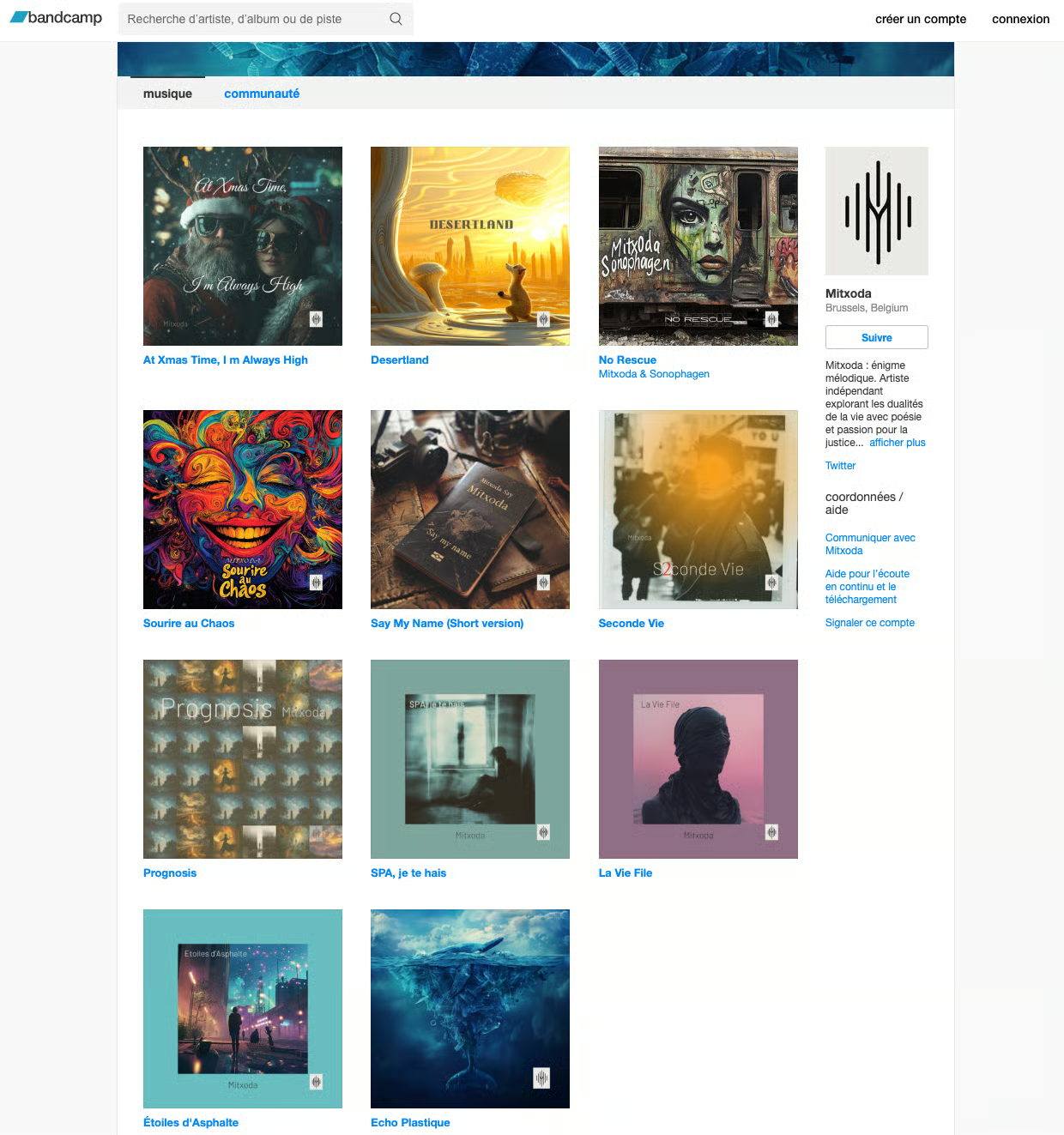
Bandcamp: A Hidden Gem for Artists and Fans Alike
While Bandcamp may not have the widespread recognition of Spotify or the reach of Facebook, this limitation comes with a surprising silver lining. On Bandcamp, I’ve had the opportunity to connect with nearly every single person who supports my music there. This isn’t just a platform where music vanishes into an algorithmic stream; it’s a place where artists and fans genuinely connect.
The smaller community size allows for real relationships to flourish, something I value deeply as an indie musician. Bandcamp has introduced me to artists who aren’t afraid to experiment, bringing unique sounds that are sometimes unavailable anywhere else. It’s thanks to this platform that I discovered Germany’s own Nadine de Macedo, whose extensive collection continues to inspire, and Aliénor, whose fantastic progressive sound offers a nice take on the genre. Both of these artists have shown me just how much talent and originality lives on Bandcamp, far from the mainstream.
This is Bandcamp’s hidden strength: it’s not just a streaming platform; it’s a curated space where creativity and connection take priority over pure exposure. And with the next Bandcamp Friday happening on December 6th, there’s no better time to support indie artists. During this 24-hour event, Bandcamp waives its revenue share, giving 100% of the sales directly to artists and labels. For anyone who wants to truly engage with music on a personal level, Bandcamp is worth every click.


